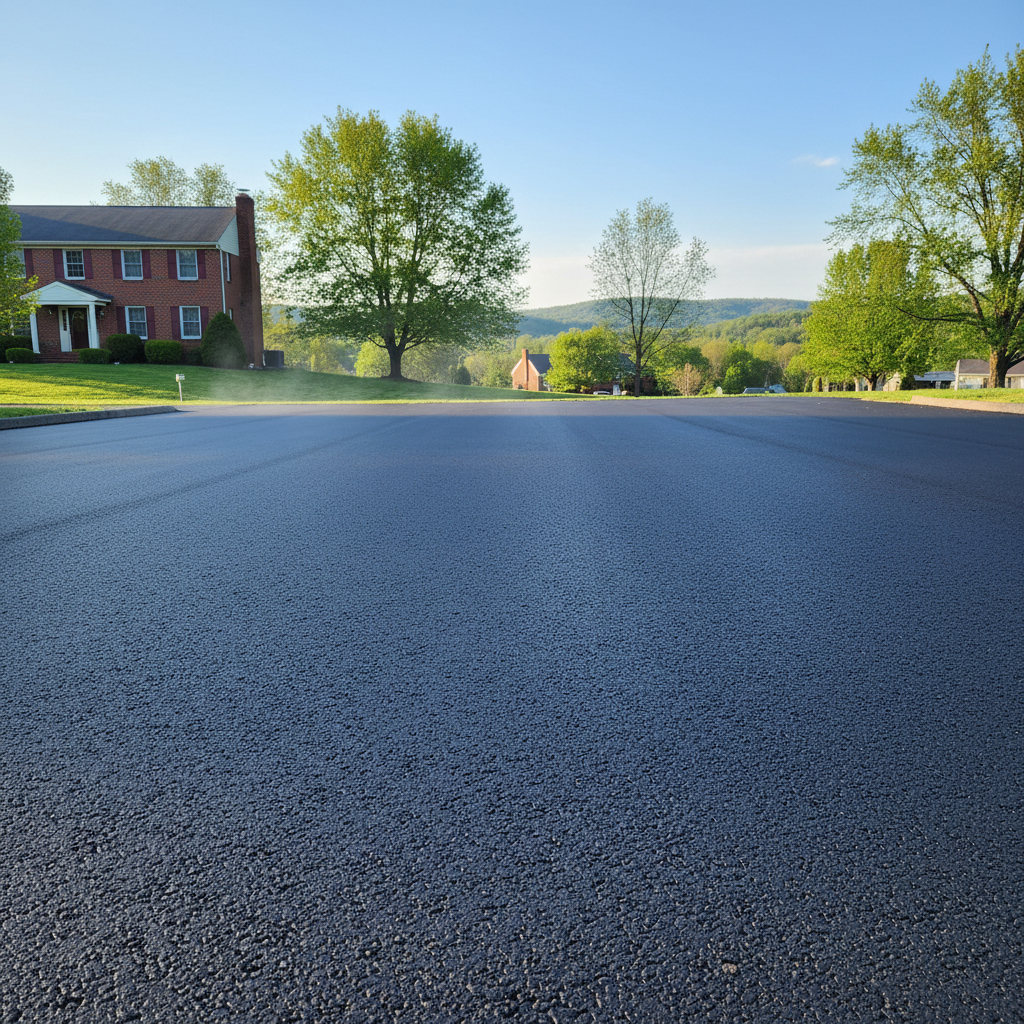
Do I really need a full parking lot at my house? Isn't a big driveway enough?
That's a fair question, and honestly, it really depends on what you're doing with the space. If you've just got a couple of cars, maybe a boat or an RV, a wide, well-designed driveway might be perfectly fine. But if you're running a business from home, or you have a lot of visitors, or you just want dedicated, organized parking spots, then a proper parking lot makes a huge difference. Think about it: a parking lot usually has specific spaces, maybe even some flow patterns, and often better drainage than just a sprawling driveway. It's all about function and how you plan to use your property. For instance, if you're in an older neighborhood like Allison Hill and you own a multi-unit property, a small, well-paved lot can be a real asset for tenants and property value. It stops cars from parking all over the grass, you know?
What's the typical cost for a residential parking lot, and what drives that price up or down?
Alright, let's talk numbers, but understand this is a big ballpark figure. A small residential parking lot, say one for 4-6 cars, could run anywhere from $8,000 to $25,000 or even more. That's a wide range because a lot of things come into play. The biggest one is size, obviously. Then there's the existing condition of the ground. If we have to do a lot of digging, remove old concrete or asphalt, or bring in a ton of new aggregate for a solid base, that adds to the cost. Drainage is another big one; proper grading and possibly even catch basins or French drains are crucial, especially with our Harrisburg winters and spring thaws. Material thickness also matters – a thicker asphalt layer will cost more, sure, but it'll last longer. Finally, any special features like line striping, curbing, or lighting will bump up the price. We always give a detailed quote after seeing the site, so you know exactly what you're paying for.
How long does it take to pave a parking lot?
For a typical residential-sized parking lot, the actual paving process itself can be pretty quick – sometimes just a day or two for the asphalt layer. But that's just the paving part. The whole project, from initial site prep to the finished product, usually takes longer. You've got excavation, grading, laying down the stone base, compacting it, and then the asphalt. Weather plays a huge role too; we can't pave in the rain or when it's too cold. So, from start to finish, you're usually looking at anywhere from a few days to a week or even two, depending on how complex the job is and what the weather's doing. We'll always give you a clear timeline upfront.
What kind of maintenance will my new parking lot need?
You've invested in a quality parking lot, so you want it to last, right? Good maintenance is key. The biggest thing is sealcoating. I know you've got other posts on that, but it's important for parking lots too. It protects the asphalt from UV rays, water, and oil spills. You'll want to do that every 2-3 years. Beyond that, keep it clean. Sweep away leaves and debris, especially in the fall, so water doesn't just sit on the surface. Fix any small cracks as soon as they appear; don't let them turn into potholes. If you see any areas where water is pooling, let us know – that could mean a drainage issue that needs fixing. Regular inspections, maybe once a year, can catch small problems before they become big, expensive ones.
What about drainage? I don't want puddles everywhere.
You're smart to ask about drainage. It's probably the most critical part of a successful paving job, especially in an area like ours where we get significant rainfall and freeze-thaw cycles. We design the lot with a slight slope, usually around 1-2%, to direct water away from buildings and towards appropriate drainage points. This might mean grading the sub-base, installing catch basins that connect to storm drains, or using French drains to collect subsurface water. We'll assess your property's specific topography and soil conditions to make sure water flows off the lot efficiently and doesn't sit and degrade the asphalt. Poor drainage leads to premature cracking, potholes, and a whole lot of headaches, so we don't cut corners here at Valley Asphalt Inc.
Can I put a parking lot on a sloped property?
Absolutely, you can. It just requires more careful planning and potentially more work. A sloped property means we might need to do more grading and excavation to create a level, stable base for the parking area. Sometimes, retaining walls are necessary to hold back soil and create a flat surface. We also have to be extra diligent with drainage design on a slope to prevent erosion and ensure water runs off correctly without washing away the base or creating standing water. It's definitely more complex than paving a flat area, but it's a common challenge we deal with. We'll come out, take a look at your specific slope, and figure out the best, safest, and most durable way to get you the parking lot you need.
What's the difference between asphalt and concrete for a parking lot?
Good question. Most residential parking lots we do are asphalt, and for good reason. Asphalt is generally more affordable upfront, quicker to install, and easier to repair. If you get a crack or a pothole, we can patch it pretty seamlessly. It's also more flexible, which helps it handle our temperature swings here in Central PA better than rigid concrete. Concrete, on the other hand, costs more initially and takes longer to cure. It's very durable and can handle heavier loads, but when it cracks, repairs are often more noticeable and can be more involved, sometimes requiring a whole slab replacement. For most homeowners looking for a functional, cost-effective parking solution, asphalt is usually the way to go. Concrete might be considered if you have extremely heavy vehicles or specific aesthetic preferences, but for general use, asphalt is the champion.