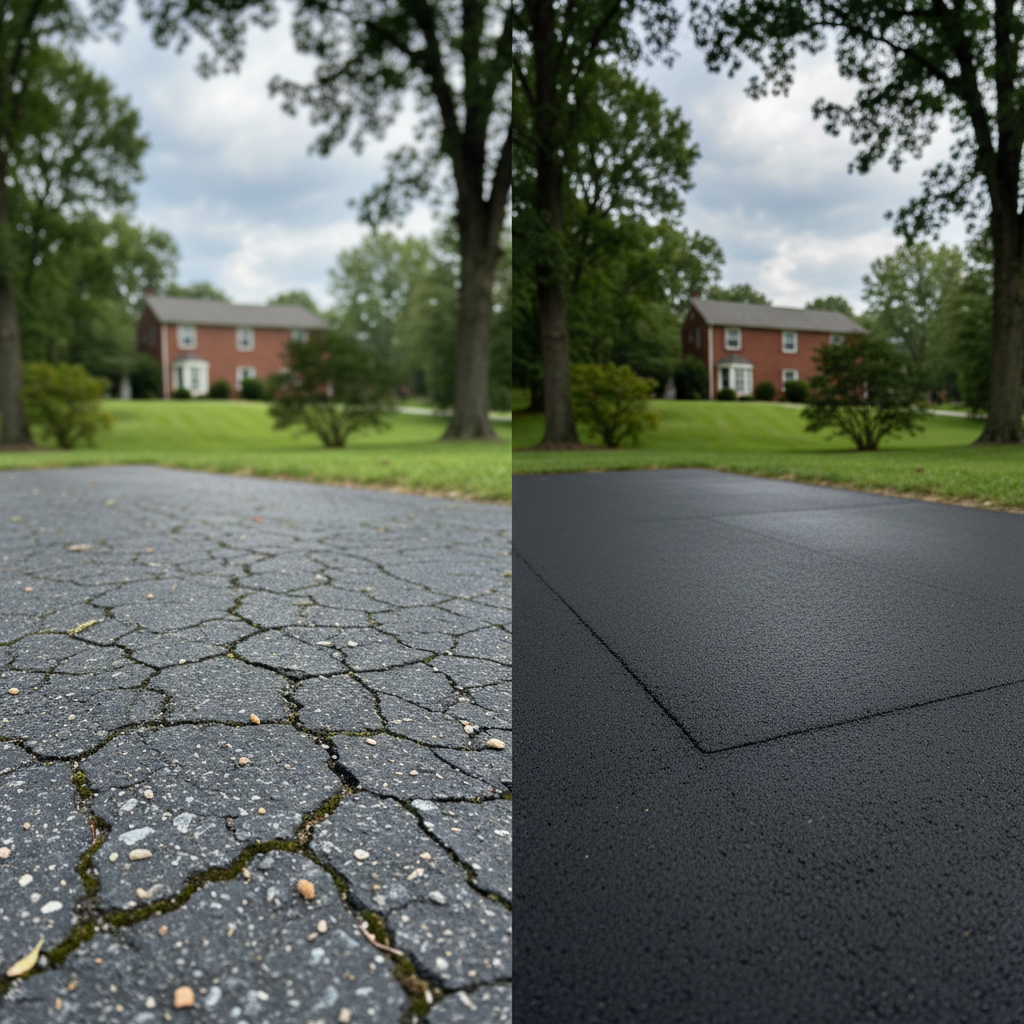
Your asphalt driveway's seen better days, hasn't it? Maybe it's just a few spiderweb cracks, or perhaps it's starting to look like a jigsaw puzzle. When you're staring down those imperfections, you generally have two main ways to go about fixing things: a targeted patch or a full asphalt overlay. Both have their place, but knowing which one's right for your Harrisburg home can save you a lot of grief — and money.
The Quick Fix: Asphalt Patching
Patching is exactly what it sounds like. We're talking about fixing specific, localized areas of damage. This usually means cutting out the bad section of asphalt, prepping the base underneath, and then filling it with new, hot asphalt mix. Think of it as a surgical strike, not a carpet bombing.
When Patching Makes Sense:
- Isolated Damage: If you've got a single pothole, a small area of alligator cracking, or some edge deterioration, patching is your go-to. It's cost-effective for these smaller issues.
- Budget-Friendly: Generally, patching costs less upfront because you're only paying for materials and labor on a small section.
- Temporary Solution: Sometimes, you just need to buy yourself some time. Maybe you're planning a full replacement in a few years, or you're selling the house soon; a good patch can hold things together.
The Downsides of Patching:
- Appearance: Let's be honest, a patch is a patch. You'll almost always see the seam where the new asphalt meets the old. It won't look seamless or brand new.
- Limited Durability: A patch fixes the symptom, not necessarily the underlying cause. If your whole driveway's base is failing, patches will keep popping up elsewhere. It's like putting a band-aid on a broken arm, really.
- Not for Widespread Issues: If more than, say, 25-30% of your driveway is cracked or crumbling, patching becomes a never-ending game of whack-a-mole. You'll spend more in the long run.
The Bigger Job: Asphalt Overlay
An overlay, sometimes called resurfacing, is a more comprehensive approach. This is where we clean and prep your existing asphalt, address any major structural issues, and then lay a brand-new layer of asphalt right over the top of the old one. It's like giving your driveway a fresh skin.
When an Overlay is Your Best Bet:
- Extensive Cracking (but still structurally sound): If your driveway has widespread surface cracks, but the underlying base is still solid, an overlay can make it look brand new. It smooths out all those imperfections.
- Improved Appearance: This is where an overlay really shines. You get a uniform, smooth, dark surface that significantly boosts your home's curb appeal. It looks fantastic.
- Enhanced Durability: A new layer of asphalt adds structural integrity and extends the life of your driveway considerably, especially when combined with proper sealcoating afterward.
- Preventative Maintenance: Catching widespread surface cracking early with an overlay can prevent water from seeping down and destroying your base, which is a much more expensive fix.
The Downsides of an Overlay:
- Higher Upfront Cost: Since you're covering the entire surface, an overlay costs more than a simple patch job.
- Not for Severely Damaged Bases: If your driveway has major potholes, significant rutting, or a completely failed base (meaning the ground underneath isn't stable), an overlay just won't fix it. You'd need a full removal and replacement in that case.
- Requires Edge Work: Sometimes, the new layer will raise the driveway's height, which means we might need to adjust transitions at your garage or sidewalk.
My Recommendation for Harrisburg Homeowners
Here in Harrisburg, especially with our freeze-thaw cycles and sometimes clay-heavy soils (I've seen it a lot in places like the Colonial Park area), water penetration is the enemy of asphalt. Those cracks let water in, which freezes, expands, and then thaws, causing more damage. It's a vicious cycle.
For most homeowners I work with, if you've got more than just a few isolated cracks – if you're seeing widespread alligator cracking or a network of smaller cracks across a good portion of your driveway – I'm going to lean towards recommending an overlay. Why? It gives you a fresh start. It seals up all those little pathways for water, which is crucial for longevity in our climate. While the initial cost is higher than patching, it's a much better investment in the long run. You'll get a beautiful, durable surface that will last you many more years, and you won't be calling us back every season for another patch.
If it's just a single pothole or a small section that's come apart, then absolutely, a patch is the smart move. But don't try to patch your way out of a driveway that's clearly failing across a large area. You'll just be throwing good money after bad.
The best thing you can do is have someone like us from Valley Asphalt Inc. come out and take a look. We'll give you an honest assessment of what your driveway really needs, not just what's cheapest or easiest for us.