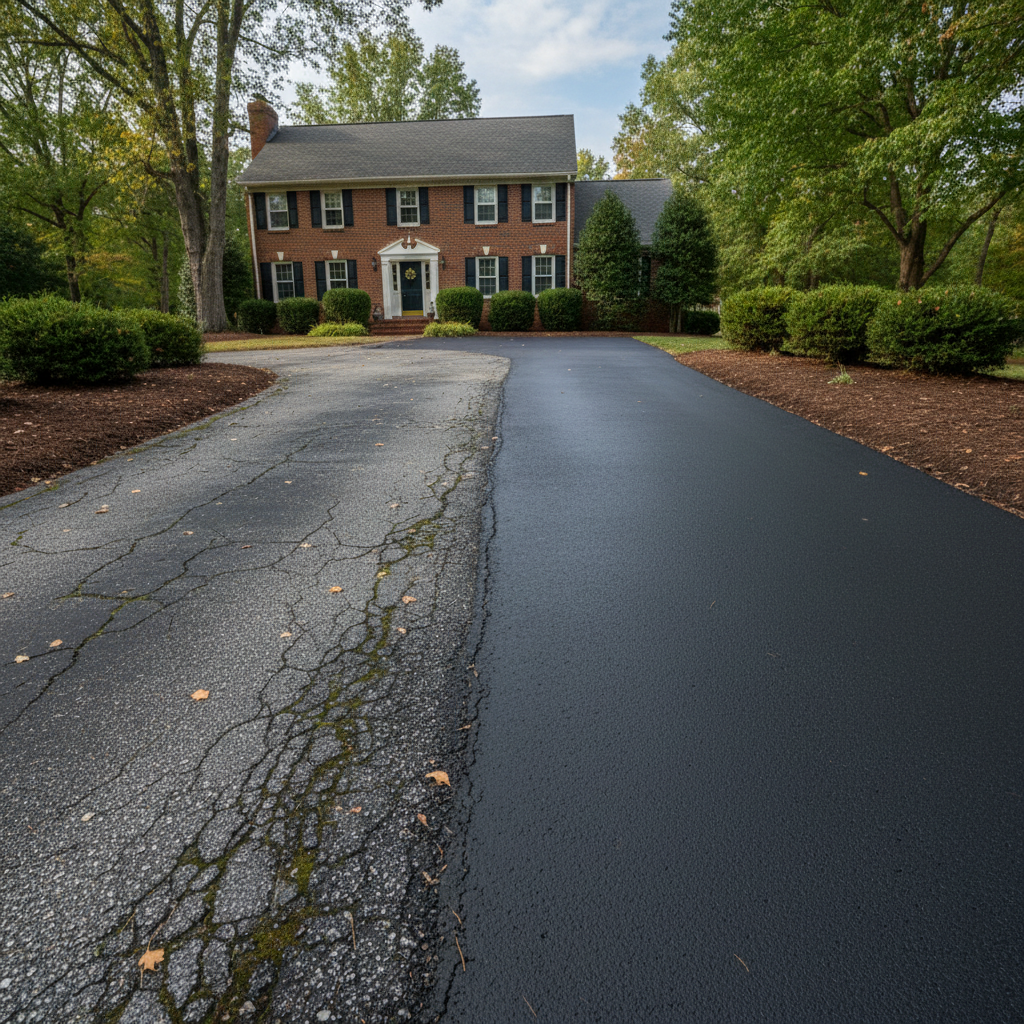
Your driveway's looking a bit tired, right? Maybe some small cracks are popping up, or the color's just not what it used to be. Time for sealcoating, you think? Smart move. Sealcoating really does protect your asphalt investment from the sun's harsh rays, water, and those brutal freeze-thaw cycles we constantly battle here in Harrisburg. But once you start digging into it, you'll quickly discover there are two main types of sealers out there. For residential driveways, it almost always comes down to either coal tar emulsion or asphalt emulsion. Let's break down what each one is, and figure out which might be the best fit for your place.
Coal Tar Emulsion: The Old Reliable
For decades, coal tar was the undisputed champion. It's made from, well, coal tar, then mixed with water, some clay fillers, and other bits and pieces. Once it dries, it leaves behind a really tough, deep black finish. Think of it like a heavy-duty shield for your asphalt.
Pros of Coal Tar:
- Durability: This stuff is seriously tough. It stands up incredibly well to chemicals like oil, gas, and salt – which, let's be honest, is a huge plus when you're parking cars on it and dealing with winter road treatments.
- Appearance: It dries to a deep, rich black color. It looks fantastic, really making your property stand out.
- Faster Drying: Generally, coal tar sealers dry quicker than asphalt emulsions. That means you can get back to using your driveway sooner, which is always nice.
- Cost-Effective: Often, it's a bit cheaper per gallon than asphalt emulsion. That can definitely save you some money, especially on a bigger job.
Cons of Coal Tar:
- Environmental Concerns: This is the big one, no two ways about it. Coal tar contains polycyclic aromatic hydrocarbons (PAHs), which are considered pollutants. Some towns have even banned its use entirely. While it's still legal in many places, including most of Pennsylvania, it's definitely something to keep in mind.
- Odor: It has a very distinct, strong smell. It can hang around for a few days after we've applied it.
- Staining: If it gets on concrete or other surfaces, cleaning it off can be a real headache.
Asphalt Emulsion: The Greener Option
Asphalt emulsion sealers are made from asphalt cement, water, and some emulsifying agents. Basically, it's asphalt in a pourable, liquid form. It's really picked up steam lately, especially as more people become aware of environmental issues.
Pros of Asphalt Emulsion:
- Eco-Friendly: This is its main selling point, hands down. It has way lower PAH levels than coal tar, making it a much more environmentally conscious choice.
- Less Odor: Sure, it still has a smell, but it's much milder and disappears faster than coal tar.
- Flexibility: Asphalt emulsion is a little more flexible than coal tar. This can be good for the minor expansion and contraction your driveway goes through with temperature changes.
Cons of Asphalt Emulsion:
- Durability (Compared to Coal Tar): While it's still very good, it's generally not quite as resistant to chemicals like oil and gas spills as coal tar. It'll protect your driveway, but a fresh oil leak might eat through it a little quicker.
- Appearance: It tends to dry to a slightly grayer, less intense black than coal tar. It still looks good, just not that super-deep black you might be picturing.
- Slower Drying: It usually takes longer to dry and cure. This means you'll need to keep off your driveway for a longer stretch of time.
- Cost: You might find it's a bit more expensive per gallon, and that can add up on bigger driveways, you know?
Maintenance and Longevity
No matter which sealer you choose, getting it applied correctly is absolutely crucial for how long it lasts. You need a super clean surface, and two thin coats are always better than one thick one. Also, make sure the weather's just right – not too hot, not too cold, and definitely no rain on the horizon. Here in Harrisburg, with our scorching summers and freezing winters, you're going to want to reseal every 2-3 years. That's true for any product. It's just the reality of protecting asphalt in our climate. And hey, regularly cleaning up spills, especially oil and gas, will also help any sealcoat last longer.
So, Which One Should You Choose for Your Harrisburg Home?
This is really where it gets personal. Here at Valley Asphalt Inc, we've worked with both types extensively, from the charming older homes in Shipoke to the newer developments out in Linglestown. If your absolute top priority is maximum chemical resistance and that super-deep black finish, and you're not overly worried about the environmental aspect, coal tar still delivers. It's been a proven product for a long time, and for good reason.
However, if you're looking for a more environmentally friendly option, want less odor, and are okay with a slightly less intense black (and maybe a tiny bit less chemical resistance), asphalt emulsion is an excellent choice. It's a great product that provides really solid protection.
Honestly, for most homeowners right here in Harrisburg, the practical difference in how long a well-applied coal tar lasts versus a well-applied asphalt emulsion isn't going to be huge. Both will protect your driveway from the elements. The biggest factor often comes down to your personal preference regarding environmental impact and that deep black aesthetic. We're always happy to chat about your specific driveway and help you weigh the pros and cons further. Just give us a call.